
Microchip ATTINY40-XUR: Comprehensive Technical Overview and Application Guide
The Microchip ATTINY40-XUR represents a highly integrated and cost-effective solution within the 8-bit AVR microcontroller family. Engineered for space-constrained and low-power applications, this tiny yet powerful MCU packs a significant set of features, making it an ideal choice for a vast array of embedded control scenarios, from consumer electronics to industrial systems.
Core Architecture and Performance
At the heart of the ATTINY40-XUR lies a high-performance, low-power AVR RISC architecture. The CPU can execute single-cycle instructions, achieving a throughput of up to 12 MIPS at 12 MHz, ensuring efficient and responsive control for real-time tasks. This performance is managed while operating within a voltage range of 1.8V to 5.5V, providing immense flexibility for both battery-powered and line-powered designs.
Memory Configuration
The device is equipped with 4KB of self-programmable Flash memory for code storage, 256B of SRAM for data handling, and 128B of EEPROM for storing critical parameters that must be retained even after a power cycle. This balanced memory configuration supports moderately complex firmware while maintaining a small footprint.
Advanced Peripheral Integration
A standout feature of the ATTINY40-XUR is its rich set of integrated peripherals, designed to minimize external component count and total system cost.
High-Performance Timer/Counters: It includes two 16-bit timers/counters with dedicated prescalers and compare modes, which are essential for waveform generation, event timing, and motor control applications.
Universal Serial Interface (USI): This highly flexible peripheral can be configured to operate in SPI, I2C, or TWI modes, providing versatile communication channels to connect with sensors, memory chips, and other peripherals.
Analog-to-Digital Converter (ADC): A 10-bit ADC with 11 channels allows for precise monitoring of analog signals from various sensors, making it suitable for data acquisition systems.
On-Chip Temperature Sensor: This integrated sensor provides a simple means for monitoring die temperature, useful for system diagnostics and environmental sensing without external parts.
Power Efficiency and Management
Power consumption is a critical design parameter. The ATTINY40-XUR excels with multiple power-saving modes, including Idle, Power-down, and Standby. These modes allow the microcontroller to enter a state of minimal power draw when not actively processing, dramatically extending battery life in portable applications. It can wake up from these modes via various internal and external interrupts.
Application Guide
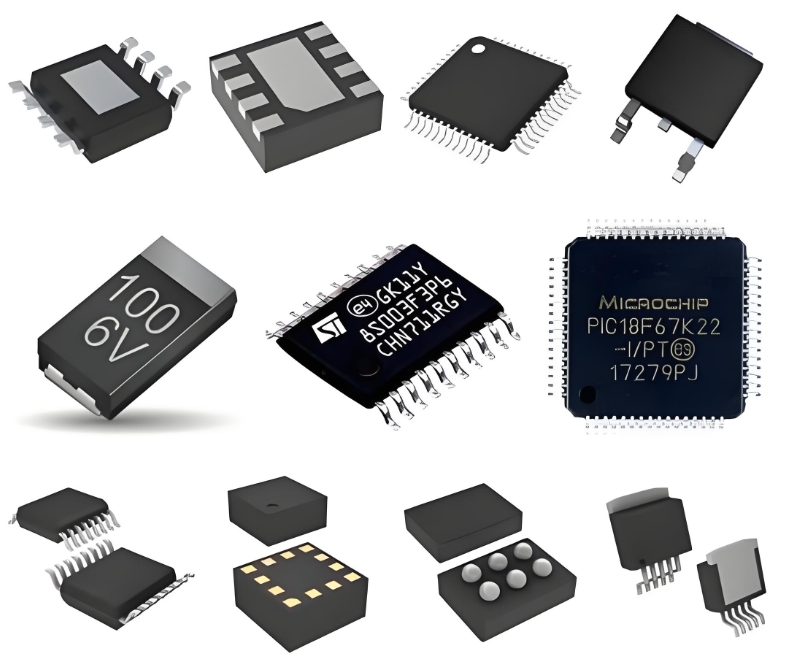
The combination of its small form factor (TSSOP-20 package for the -XUR variant), low power, and integrated features opens numerous application possibilities:
Consumer Electronics: Remote controls, touch sensors, and intelligent chargers.
Industrial Control: Sensor nodes, actuator control, and system monitoring.
Internet of Things (IoT): Simple edge nodes for data collection and preprocessing.
Automotive: Auxiliary control units, interior lighting systems, and basic sensor interfaces.
Designers should leverage the Atmel Studio or MPLAB X IDE with the AVR/GNU C compiler for firmware development. Utilizing the on-chip debug system (debugWIRE) allows for easy programming and in-circuit debugging.
ICGOOODFIND
In summary, the Microchip ATTINY40-XUR is a remarkably capable microcontroller that punches well above its weight class. Its blend of processing power, extensive peripheral integration, and outstanding power efficiency makes it a superior choice for designers aiming to create compact, reliable, and cost-sensitive electronic products. It embodies the principle of achieving maximum functionality with minimal resource usage.
Keywords:
1. Low-Power
2. AVR Microcontroller
3. Cost-Effective
4. Integrated Peripherals
5. Embedded Control

