
**HMC493LP3E: A Comprehensive Analysis of its High-Performance mmWave Capabilities and Circuit Integration**
The relentless drive for higher data rates and greater bandwidth in modern communication and radar systems has propelled the development of advanced monolithic microwave integrated circuits (MMICs) operating in the millimeter-wave (mmWave) spectrum. Among these, the **HMC493LP3E** stands out as a quintessential component, engineered to deliver exceptional performance in the challenging frequency bands above 20 GHz. This article provides a detailed examination of its architectural strengths, its superior mmWave capabilities, and its critical role in seamless circuit integration.
At its core, the HMC493LP3E is a gallium arsenide (GaAs), pseudomorphic high electron mobility transistor (pHEMT) based **distributed power amplifier MMIC**. This technological foundation is paramount to its success. The pHEMT process offers an excellent combination of high electron mobility and breakdown voltage, which is essential for achieving both high gain and good power handling at frequencies where traditional semiconductors falter. The distributed amplifier architecture, often termed a traveling-wave amplifier, is uniquely suited for ultra-broadband operation. It effectively incorporates the transistor's parasitic capacitances and inductances into artificial transmission lines, allowing it to maintain consistent performance over a wide bandwidth. The HMC493LP3E exemplifies this, delivering **outstanding broadband performance from 17 to 38 GHz**, a range that encompasses numerous K-band and Ka-band applications.
The high-performance capabilities of this amplifier are revealed in its key electrical characteristics. It achieves a typical **small-signal gain of 16 dB**, which is substantial for a single component at these frequencies, effectively boosting weak signals from oscillators or mixers. Furthermore, it can deliver a **saturated output power (Psat) of up to +23 dBm** and an output third-order intercept point (OIP3) of approximately +32 dBm. These metrics underscore its ability not only to amplify signals but to do so with the linearity required for complex modulation schemes found in 5G backhaul, point-to-point radio links, and electronic warfare systems. Its robust power output makes it an ideal driver amplifier for subsequent high-power stages or a final amplifier in lower-power transmitters.
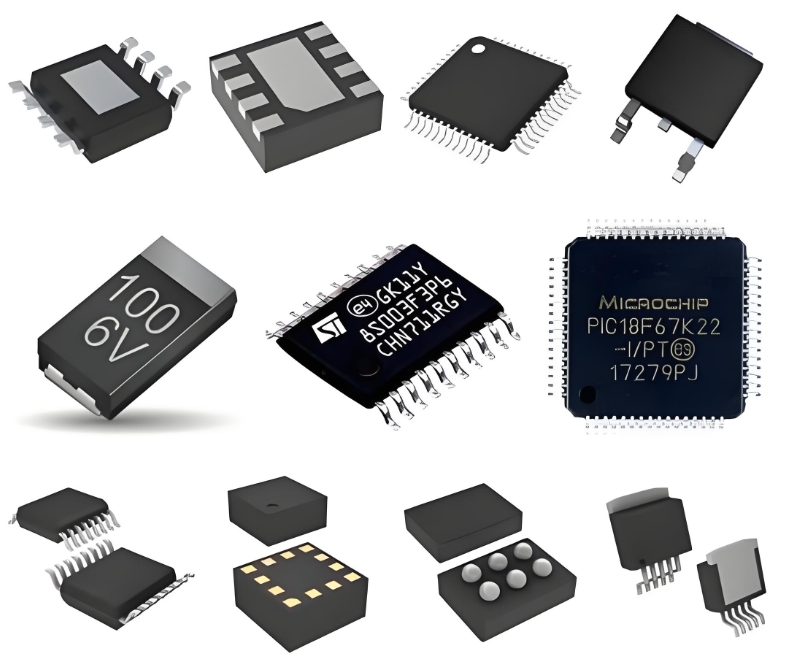
Beyond its raw performance, the **HMC493LP3E is designed for simplified integration into larger mmWave assemblies**. Housed in a leadless 3x3 mm QFN (Quad-Flat No-Leads) package, it provides a compact and mechanically robust solution. The package is optimized for surface-mount technology (SMT), enabling high-volume, automated PCB assembly—a significant advantage over bare-die solutions that require complex and costly wire-bonding. The internal design includes on-chip DC blocking capacitors and bias networks, simplifying the external circuitry required to operationalize the component. Designers need only apply the required drain and gate voltages through RF chokes, significantly reducing the bill of materials and design time. This "drop-in" capability accelerates development cycles for complex phased array radars, satellite communication terminals, and test and measurement equipment.
In practical application, the integration of the HMC493LP3E demands careful attention to high-frequency PCB design principles. The use of Rogers Corporation materials or other low-loss laminates is recommended to minimize dielectric losses. Proper grounding via numerous plated through-holes adjacent to the package paddle is critical for achieving stable performance and effective heat dissipation. Additionally, the input and output transmission lines must be precisely impedance-matched to 50 Ohms to prevent standing waves and ensure maximum power transfer.
**ICGOOODFIND:** The HMC493LP3E is a benchmark component in the mmWave amplifier landscape, successfully merging **exceptional broadband gain, high output power, and superior linearity** within a highly integrable SMT package. Its design effectively mitigates the traditional challenges of mmWave circuit design, making high-frequency performance more accessible and reliable for next-generation systems.
**Keywords:** mmWave Amplifier, Broadband Performance, Circuit Integration, pHEMT Technology, SMT Package.

