
In the architecture of modern computing, network connectivity is a critical function, often enabled by highly integrated and specialized components. Among these, the Physical Layer (PHY) transceiver serves as the fundamental interface between the digital world of a computer and the analog signals transmitted over network cables. The Intel EP82562ET stands as a quintessential example of such a component, providing a reliable and efficient Ethernet connection solution for a vast array of computing platforms during its era.
Primarily, the EP82562ET is a single-port 10/100 Mbit/s Ethernet PHY. It was designed to interface between the Media Access Control (MAC) layer, typically integrated into a motherboard's chipset, and the twisted-pair wiring of a local area network (LAN). Its role is to manage the essential analog signaling processes, including modulation, line driving, and signal recovery. This involves converting digital data packets from the MAC into analog signals for transmission over the cable and translating incoming analog signals back into digital data. Key to its operation is the implementation of the IEEE 802.3u standard, ensuring full compatibility with the widespread Fast Ethernet protocol.
A defining characteristic of the Intel EP82562ET was its common integration into Intel's own chipsets, particularly the ICH (I/O Controller Hub) family. This tight integration simplified motherboard design by providing a complete, proven LAN connectivity solution directly from the platform's core logic. For system builders and major OEMs, this meant reduced time-to-market, lower design complexity, and assured interoperability. The PHY often appeared in conjunction with a controller function, forming a complete LAN on Motherboard (LOM) solution that was a staple in business desktops, entry-level servers, and various embedded systems throughout the 2000s.
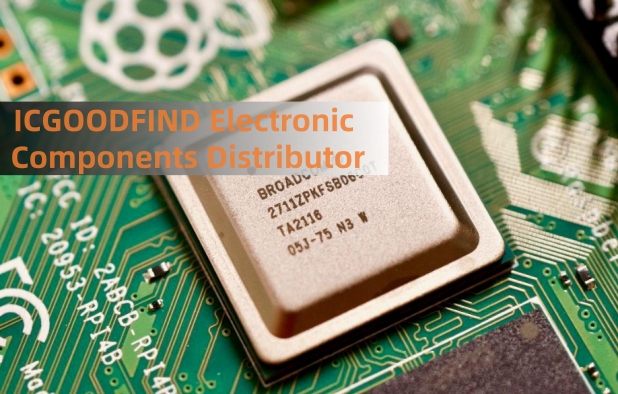
Beyond basic connectivity, the EP82562ET incorporated several features crucial for robust network performance. It supported Auto-Negotiation, allowing it to automatically select the highest possible transmission speed (100BASE-TX or 10BASE-T) and duplex mode with a link partner. It also included advanced capabilities like power management, which was vital for evolving power efficiency standards, and Wake-on-LAN (WoL) functionality, enabling a powered-down computer to be awakened by a specific network message.
While surpassed in performance by modern Gigabit and multi-gigabit PHYs, the impact of the Intel EP82562ET is undeniable. It provided a rock-solid, industry-standard foundation for wired networking in an era of explosive growth in business and home computing. Its reliability and ubiquity helped cement Ethernet as the dominant wired LAN technology, supporting the applications that drove the early internet economy.
ICGOODFIND: The Intel EP82562ET was a foundational and highly integrated Fast Ethernet PHY transceiver that delivered reliable, standards-compliant network connectivity, simplifying motherboard design and enabling the widespread adoption of LAN-on-Motherboard solutions for a generation of computing hardware.
Keywords: Ethernet PHY, Fast Ethernet, Physical Layer, Network Interface, LAN on Motherboard

