
Intel P8032AH: The Microcontroller that Powered an Era of Embedded Innovation
The landscape of modern electronics was irrevocably shaped by the rise of the microcontroller, a single-chip computer designed to invisibly manage the world around us. At the forefront of this revolution was the Intel P8032AH, a component that became a cornerstone of embedded systems design and a true workhorse of industry. More than just a processor, it was the engine that powered a generation of innovation, embedding intelligence into everything from factory floors to consumer products.
As an enhanced member of the Intel MCS-51 family, the P8032AH built upon the foundation of the iconic 8051. The "AH" suffix denoted an advanced technology CHMOS process, which offered a powerful combination of high speed and low power consumption—a critical advantage for battery-operated or energy-sensitive applications. Its core architecture integrated all the essential components of a computer: a powerful 8-bit CPU, 256 bytes of internal RAM, and, crucially, the capability to address up to 64KB of external program and data memory. This flexibility allowed designers to scale their systems for both simple and highly complex tasks.
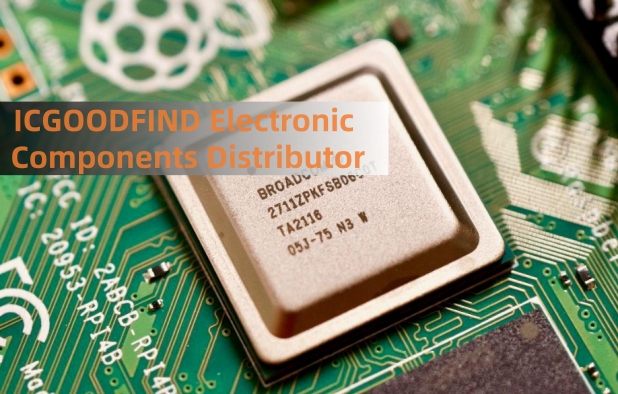
What truly set the P8032AH apart was its robust and versatile set of integrated peripherals. It featured a full-duplex UART for serial communication, enabling devices to talk to each other and to PCs. Its four versatile 8-bit I/O ports provided the essential interface to the physical world, allowing it to read sensors, control motors, and light up displays. Furthermore, its two 16-bit timer/counters were indispensable for tasks requiring precise timing, event counting, or generating pulse-width modulated (PWM) signals for motor control.
The impact of the P8032AH was profound and widespread. It became the invisible brain inside an astonishing array of devices. It automated industrial processes, managing robotic arms and conveyor belts with newfound precision. In telecommunications, it handled complex modem protocols. Consumer products, from advanced automotive dashboards and engine control units to sophisticated keyboards and televisions, were suddenly smarter and more responsive thanks to this powerful chip. Its design fostered a massive ecosystem of development tools, compilers, and application notes, which lowered the barrier to entry for embedded design and empowered a global generation of engineers.
ICGOOODFIND: The Intel P8032AH was far more than a component; it was an enabler. Its balanced architecture of processing power, memory flexibility, and integrated peripherals established a de facto standard for microcontroller design. It provided the reliable, scalable, and accessible compute platform that engineers needed to turn ambitious ideas into revolutionary real-world products, truly powering an era of embedded innovation.
Keywords: Intel P8032AH, Microcontroller, MCS-51 Architecture, Embedded Systems, Industrial Control.

